
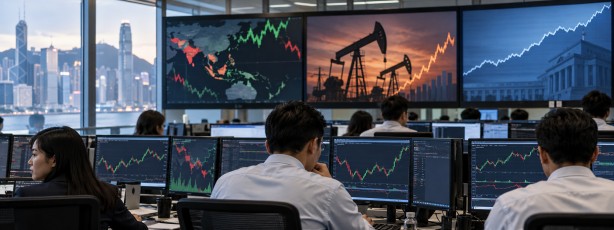
Asian markets presented a mixed picture on Friday as investors grappled with the implications of rising oil prices, increasing government bond yields, and ongoing geopolitical tensions in the Middle East. These factors have continued to influence market sentiment, causing fluctuations across the region.
The price of oil, which surged over 3% on Thursday, saw a modest decline of approximately 0.7% during Friday’s trading session. Despite this slight dip, concerns about energy supply and inflation persist, especially given the current geopolitical climate. The renewed tensions in the Middle East have exacerbated fears about the global oil market, potentially impacting inflation and economic growth worldwide.
In the bond market, yields have reached significant highs, drawing further attention from investors. The US 10-year Treasury yield climbed to its highest point since 2007, while the 30-year yield reached levels not seen since 2004. Japan’s 10-year government bond yield also hit a fresh 30-year high, highlighting a broader trend of rising yields across key markets.
Stock market performances in Asia reflected this mixed sentiment. Japan’s Nikkei 225 index rose by 1.2%, in contrast to Hong Kong’s Hang Seng Index, which fell by 1.8%. Meanwhile, markets in Shanghai, Seoul, and Taipei were closed for holidays, leaving fewer regional indicators available for investors.
Adding to the complexity of the market environment are developments in US-China trade relations. The announcement that Washington and Beijing have agreed to extend their trade truce for an additional two months provides some relief, though unresolved issues such as tariffs, agricultural purchases, and technology restrictions continue to loom large.
Overall, the combination of rising oil prices, elevated bond yields, and geopolitical tensions has left investors cautious, with market movements reflecting the ongoing uncertainty in the global economic landscape.