
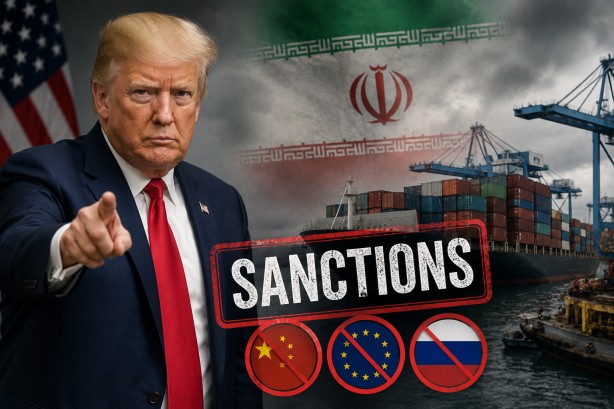
The United States is ramping up its efforts to isolate Iran economically by threatening stringent sanctions against countries and businesses that continue to engage in commerce with Tehran. This move by Washington aims to curtail Iran’s access to international revenue, particularly targeting those involved in facilitating Iranian oil sales or financial transactions. US Treasury Secretary Scott Bessent has emphasized that entities maintaining their economic ties with Iran might be given deadlines to cut off their dealings or face punitive measures from the US.
This strategy has sparked apprehension about a possible clash with China, which stands as Iran’s largest trading partner and a prominent buyer of its oil. Despite the US pressure, Beijing has resisted the sanctions approach, advocating for political and diplomatic solutions instead. Meanwhile, Iran has issued warnings of potential retaliation against nations participating in the US campaign, suggesting that their responses could range from military to cyber actions.
The heightened US sanctions threat arises amidst ongoing tensions over Iran’s nuclear program and the strategic Strait of Hormuz, a vital conduit for the world’s energy supplies. While the US has employed economic constraints to curtail Iranian oil exports, Iran continues to exert influence over the shipping routes passing through this critical waterway. Washington asserts that its economic measures are aimed at compelling Tehran to alter its behavior following unsuccessful military efforts to attain broader goals. Nonetheless, US officials indicate that military options remain on the table.
The specter of US-imposed sanctions is already impacting Iran’s trade relations. The United Arab Emirates has reacted by halting its trade links with Iran. However, Turkey, another key economic partner of Iran, has not yet disclosed its stance regarding the latest US measures. The unfolding scenario underscores the complex geopolitical dynamics at play, as the US intensifies its campaign to economically isolate Iran.