
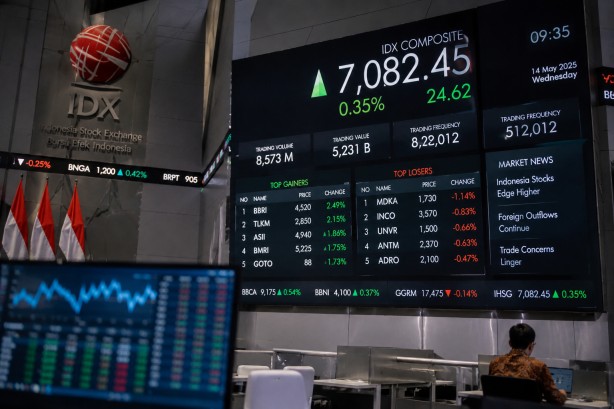
Throughout the week concluding on July 24, Indonesia’s stock market displayed a modest upward trend, with the Jakarta Composite Index (JCI) increasing by 0.34%. This growth was primarily driven by heightened trading activity, even as foreign investors continued to pull funds out of the market and global economic uncertainties loomed. The Indonesia Stock Exchange saw its market capitalization climb to Rp 10,870 trillion, while the average daily trading volume jumped by 41%, reaching Rp 19.76 trillion.
Despite these local gains, foreign investors maintained a cautious stance towards Indonesian assets, evidenced by a net selling trend. So far this year, foreign outflows have accumulated to Rp 79.09 trillion. This persistent withdrawal reflects a broader cautious sentiment, as international and domestic factors continue to influence investment decisions in Indonesia.
External pressures have also emerged, notably with the rise in global oil prices. These increases are partly attributed to escalating tensions in the Middle East, which have contributed to a less predictable global economic environment. Compounding these issues, the United States has introduced new tariffs on imports from several countries, including a 10% duty on specific Indonesian goods. These measures have further complicated the economic landscape for Indonesia.
In light of these developments, Indonesia’s Finance Ministry has expressed awareness of the potential fiscal challenges posed by rising oil prices, which could add strain to the country’s 2026 state budget. However, officials remain confident in the stability of Indonesia’s overall fiscal position, suggesting that the country is well-equipped to navigate these economic hurdles.