
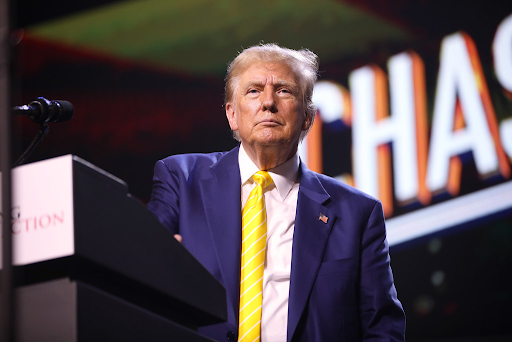
With President Trump announcing a new 15% tariff on all US imports just hours after the Supreme Court struck down his previous tariff authority, the immediate question for businesses, consumers, and trading partners is simple: what happens next? The answer, unfortunately, is more uncertainty, more legal battles, and more economic disruption before any resolution is reached.
In the short term, the new tariffs — authorized under Section 122 of the Trade Act of 1974 — will take effect immediately, with a 150-day window before congressional approval becomes necessary. Certain goods are exempt, including critical minerals, metals, pharmaceuticals, and USMCA-compliant goods from Canada and Mexico. Sector-specific tariffs on steel, aluminum, lumber, and autos remain in place, untouched by the Supreme Court ruling.
The medium-term outlook is defined by legal uncertainty. Section 122 has never been used before, making it an untested legal instrument that is almost certain to face court challenges. The administration says it will use the 150-day window to develop new, legally durable tariff mechanisms — a process that will require navigating a federal judiciary that has already demonstrated its willingness to constrain executive trade authority.
Internationally, the US’s trading partners are recalibrating. Germany and France are coordinating a European response, the UK is reassessing what remains of its 10% tariff arrangement, and countries across Asia, Latin America, and beyond are watching to see whether the Trump tariff regime has staying power or will continue to be dismantled by the courts. The uncertainty itself has economic costs, dampening investment and trade planning.
For American consumers and businesses, the outlook is one of continued elevated costs. Studies show 90% of tariff costs are ultimately passed on to US buyers. Business groups are calling for refunds from the IEEPA era and are unlikely to be enthusiastic about higher rates going forward. With legal challenges ahead, a 150-day countdown underway, and a politically charged atmosphere surrounding trade policy, the months ahead promise to be turbulent.