
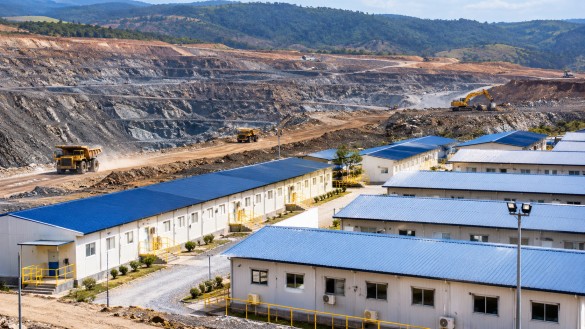
Indonesia’s planned Elang copper-gold mine on Sumbawa Island is underscoring the critical need for extensive workforce accommodation and supporting infrastructure in large-scale mining projects. As PT Amman Mineral Nusa Tenggara (AMNT) progresses with the development, the focus is on planning for the substantial number of construction workers, engineers, and operational personnel involved. The project, with an estimated initial investment of approximately Rp80 trillion, highlights the scale of the development as well as the infrastructure required to support it.
Elang is recognized as one of the world’s largest undeveloped copper-gold deposits, boasting approximately 2.5 billion tonnes of ore reserves. The project’s construction is anticipated to proceed in stages following comprehensive environmental impact assessments, engineering design, and other preparatory activities. The plans envisage a long-distance overland conveyor linking the mine to existing facilities at the Batu Hijau mining complex, including mineral processing, power generation, port, and smelting operations.
Large mining endeavors necessitate more than just extraction equipment and production facilities; they require comprehensive infrastructure for worker accommodation, site offices, dining areas, medical services, and recreational spaces. During peak construction periods, camps may need to house thousands of individuals, including contractors and technical specialists, making coordinated infrastructure planning essential.
Various prefabricated building systems are considered to meet different stages and functions within a mining camp. Modular worker accommodation can offer standardized living facilities, while prefabrication reduces the construction burden at remote sites. K-type prefabricated buildings can support temporary dormitories and project offices, whereas T-type structures may serve larger dormitory areas, dining halls, and communal spaces.
For longer-term management offices and staff accommodations, light steel buildings may be used, considering design requirements like wind and seismic loads, drainage, and fire safety. The selection of building systems for large mining camps must also consider occupancy levels, service life, and compliance with local regulations.
This immense scale of the Elang development emphasizes the importance of integrating camp planning into the broader mining infrastructure strategy. Projects involving numerous buildings require meticulous coordination in design, production scheduling, and logistical arrangements. As the project evolves, workforce and accommodation needs will guide the planning and delivery of both temporary and permanent facilities.
LINCHENGLONG
Guangdong Yashun Housing Technology Co., Ltd.
[email protected]
Legal Disclaimer:
The information contained in this article has been provided by independent third-party contributors, clients, or content partners. We do not independently verify the accuracy, completeness, legality, ownership, licensing, or reliability of submitted content, including text, images, videos, trademarks, or other media materials. The submitting party is solely responsible for ensuring that all content, including images and media assets, complies with applicable copyright, trademark, licensing, and intellectual property laws. We disclaim liability for any unauthorized use of copyrighted or proprietary materials by third parties. If you believe that any content published on this platform infringes your intellectual property rights, kindly contact the author above for prompt review and resolution.